
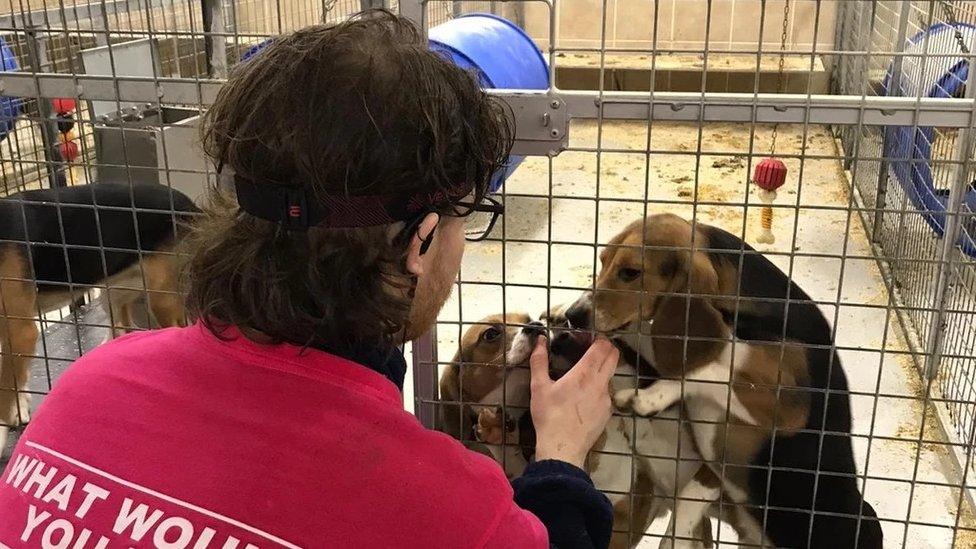
A growing chorus of celebrities, politicians and animal welfare organisations has intensified pressure on the Government to shut down the UK’s only facility dedicated to breeding beagles for animal testing.
 High-profile names including Britain’s Got Talent judge Amanda Holden, actress Dame Joanna Lumley and broadcaster Jonathan Ross have signed an open letter calling for the immediate closure of MBR Acres, a research breeding site in Wyton, Cambridgeshire.
The letter, addressed to Home Secretary Shabana Mahmood, urges ministers to act decisively and “let Britain lead the world into a future without animal testing” by shutting the facility and ensuring the safe rehoming of all dogs currently housed there.
The focus on MBR Acres

Activist group Animal Rising has played a prominent role in the campaign. The organisation previously conducted what it described as “rescue missions” at the site and has staged high-profile demonstrations, including defacing a portrait of King Charles III in London in 2024 to highlight animal welfare concerns.
In the newly submitted letter, signatories argue that public opinion has shifted decisively against animal testing and that the Government should honour its pledge to phase it out. They claim that allowing the continued breeding of dogs for experimentation is incompatible with Britain’s self-image as a nation of animal lovers.
 Animal Rising director Rose Patterson said the British public is “united on this and expects change at the highest level,” adding that shutting down MBR Acres would be “the easiest first step” towards fulfilling the Government’s manifesto commitment.
Celebrity backing and political pressure
Support for the campaign extends beyond the entertainment world. Other well-known figures who have previously voiced opposition to the facility include singer Will Young, who chained himself to the site’s gates in 2021, and comedian Ricky Gervais, who has publicly criticised animal experimentation.
Broadcaster Chris Packham, Lucy Watson from Made In Chelsea and former Blue Peter host Gail Porter have also added their names to the letter.
Politically, the campaign has drawn cross-party support. Labour MPs, Liberal Democrat peers, Green Party representatives and others have endorsed calls for the site’s closure. Among them is Green MP Carla Denyer, who questioned the Government’s consistency after animal testing sites were recently categorised as “Key National Infrastructure” under amendments to the Public Order Act.
Some critics argue that this designation risks prioritising the protection of facilities over the welfare concerns raised by campaigners. They suggest it sends mixed messages at a time when ministers have reiterated ambitions to reduce and eventually replace animal testing.
 Government and industry response
The Government maintains that the UK operates under some of the strictest animal research regulations in the world. A spokesperson emphasised that animal testing is permitted only when “genuinely needed” and conducted under tightly controlled, licensed conditions.
Officials also pointed to the £75 million “Alternatives Strategy,” which aims to accelerate the development and adoption of non-animal research methods. Advances in genomics, organoid systems and 3D cell models are cited as potential pathways to reducing reliance on live animals in scientific studies.
However, the strategy acknowledges that certain forms of animal research may continue for the foreseeable future where no validated alternatives exist.
Marshall BioResources, the parent company of MBR Acres, defended its operations, stating that animals used in biomedical research must be specially bred and raised under strict welfare standards. The company said its facilities are regularly inspected by the Home Office, including unannounced visits, and that all projects require approval.
It also argued that current UK and international regulations still mandate animal studies in the development of new medicines, describing its work as a “vital part of the UK’s research infrastructure” contributing to scientific progress and pandemic preparedness.
Legal battles and controversy
The campaign has not been without legal consequences. Several trials have taken place in relation to break-ins and attempted rescues at MBR Acres. Verdicts have included acquittals and convictions, with sentences ranging from conditional discharges to suspended prison terms.
In 2022, activists removed five beagles from the facility, though burglary charges were later dropped. More recently, planned large-scale actions targeting farms were cancelled after warnings from animal welfare bodies that such activities could distress animals and spread disease.
These episodes have fuelled debate over the tactics used by some campaigners. While supporters see them as acts of civil disobedience aimed at exposing cruelty, critics describe them as disruptive and potentially dangerous.
A broader ethical debate
At the heart of the controversy lies a complex ethical and scientific question: how to balance medical progress with animal welfare.
Proponents of continued animal testing argue that it remains essential for ensuring the safety and efficacy of new treatments. Opponents contend that technological advances render many traditional models outdated and that resources should be redirected towards humane alternatives.
 The renewed celebrity-backed appeal adds momentum to a debate that has simmered for decades. With public petitions surpassing 170,000 signatures and cross-party political backing growing, pressure is mounting on ministers to clarify their position.
Whether the Government will move to close MBR Acres remains uncertain. What is clear, however, is that the issue has once again captured national attention — propelled not only by activists on the ground but also by some of Britain’s most recognisable faces.
As the conversation continues, the fate of the beagles in Wyton has become a symbol of a wider reckoning over the future of animal testing in the UK.


