
Some people leave behind photographs, memories and stories.
David J.C. Austin leaves behind something that will continue to bloom.
Across gardens in Britain and far beyond, millions of roses carrying the legacy of his family’s extraordinary work will open their petals season after season — long after the man who devoted so much of his life to them has gone.
The celebrated rose grower and longtime Gardeners’ World contributor has died aged 67 following a diagnosis of Creutzfeldt-Jakob disease, a rare and incurable neurological condition.
And among those paying tribute was Monty Don, whose beautifully simple words seemed to capture the extraordinary legacy David leaves behind.
“I am so sorry to hear this. My regards and condolences to all his family,” Monty wrote.
Then came the line that perhaps said everything.
“But what legacy he leaves — millions of exquisite roses that will live on for so many, enriching all our lives.”
For anyone who loves gardening, there is something deeply moving about those words.
Because David’s legacy is not hidden away in an archive or confined to memories.
It is alive.
It is growing in gardens.
It is flowering against cottage walls, climbing over arches and filling summer borders with colour and fragrance.
And every time those roses bloom, a small part of his life’s work continues.
A gardener before everything else
David was born in 1958 into a family whose name would become synonymous with some of the world’s most admired English roses.
In 1990, while still in his early thirties, he joined the family business established by his father, legendary rose breeder David C.H. Austin.
What followed was more than three decades of stewardship.
David eventually became chairman and helped carry forward the extraordinary vision his father had begun.
Under his leadership, the family nursery in Albrighton, Shropshire, grew from a specialist rose business into a name recognised by gardeners around the world.
But behind the success was something much simpler.
A genuine love of gardening.
His children, Richard, James and Olivia, made that beautifully clear when remembering their father.
“First and foremost, Dad was a gardener,” they said.
“That was at the heart of who he was.”
Those words struck me most while following the tributes to David.
Not chairman.
Not businessman.
Not television contributor.
Gardener.
Perhaps that is exactly how he would have wanted to be remembered.
A familiar face to generations of gardening fans
For viewers who followed Gardeners’ World and Britain’s biggest horticultural events, David became a familiar presence over the years.
His connection with the programme extended beyond simply growing beautiful roses.
He appeared on screen, shared his expertise and became part of a wider gardening community that has inspired generations of people to step outside, pick up a pair of secateurs and create something beautiful.
He was also a familiar figure at major gardening events, including Gardeners’ World Live and the Chelsea Flower Show.
There, surrounded by spectacular displays and countless varieties of roses, David seemed completely at home.
These were not simply flowers bearing a famous family name.
They represented decades of patience.
Breeding a remarkable rose can take years.
There are disappointments, experiments and countless plants that never become the one growers have been searching for.
But when everything finally comes together — fragrance, colour, shape, health and character — something extraordinary can emerge.
David understood that process intimately.
And he dedicated much of his life to protecting and extending the vision his father had begun.
“He was kind and modest”
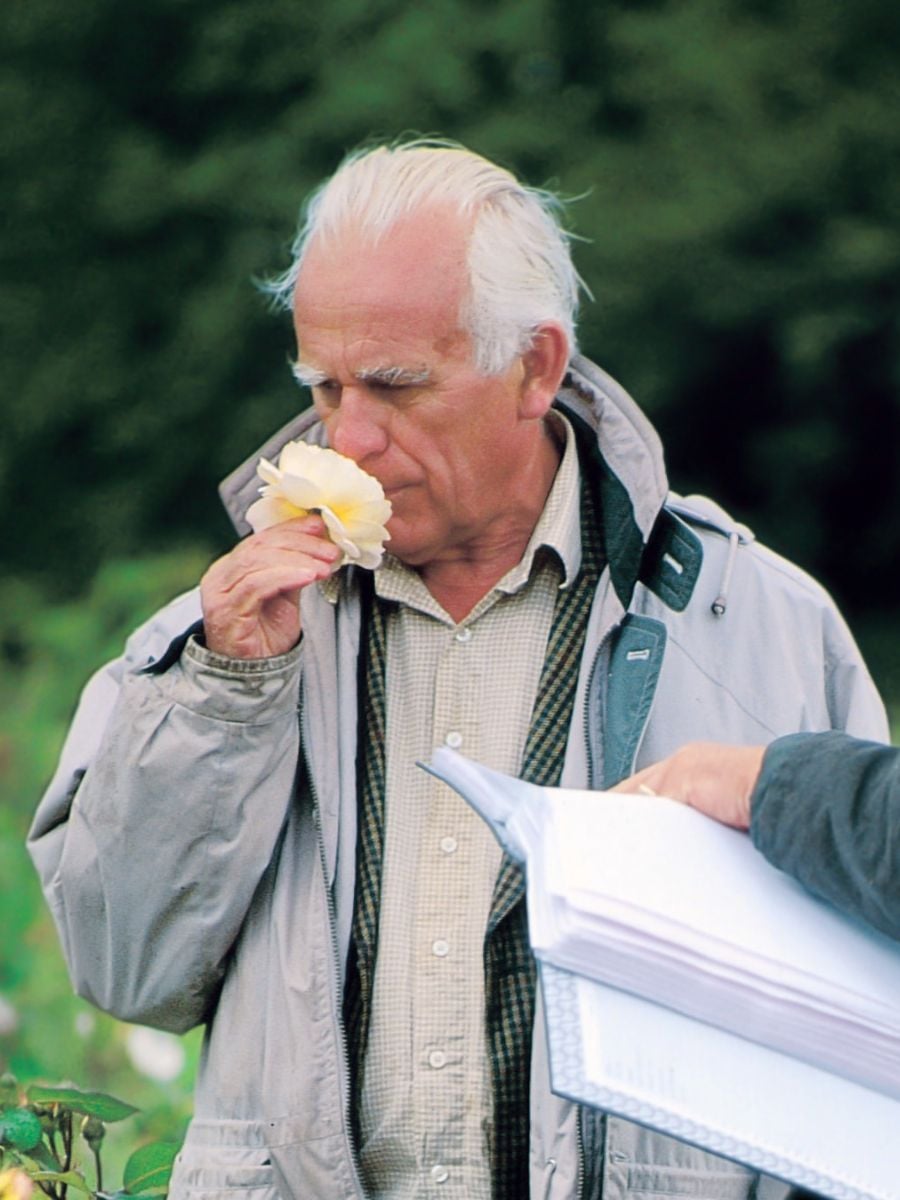
Yet the most powerful picture of David has come not from television appearances or professional achievements.
It has come from his children.
Their tribute revealed the man behind the roses.
They remembered a father who carried his own father’s vision “with humility and an unwavering sense of responsibility”.
They described him as kind and modest, but also someone with a playful spirit, a sense of adventure and a genuine enjoyment of life.
Those small details matter.
Because when someone becomes associated with a famous business or celebrated legacy, it can be easy to see only the public figure.
Families remember something entirely different.
The jokes.
The conversations.
The ordinary mornings.
The familiar voice coming through the door.
The person behind everything the rest of us saw.
For Richard, James and Olivia, David was not simply the chairman of one of the world’s best-known rose companies.
He was Dad.
“Above all, he was our Dad, and words cannot express how much we will miss him,” they said.
“We couldn’t be more proud of him.”
Few words could be more heartbreaking — or more beautiful.
Facing illness with courage
David had been diagnosed with Creutzfeldt-Jakob disease, commonly known as CJD.
It is a rare neurological condition that causes progressive damage to the brain and currently has no cure.
According to his family, David faced his illness with the same qualities he had brought to his life: courage and dignity.
He died at his home in Shropshire, surrounded by his family.
There is something particularly poignant about knowing that his final chapter unfolded in the county so closely connected to his life and work.
Shropshire was not simply where David lived.
It was where generations of his family turned an extraordinary passion for roses into a horticultural legacy recognised across the world.
Monty Don’s words captured something bigger

Tributes quickly followed the news.
But Monty Don’s message stood out for its simplicity.
“What a legacy he leaves.”
Five words that carry enormous meaning.
Because how do you measure the legacy of someone like David?
Perhaps not simply in awards.
Not in television appearances.
Not even in decades of professional achievement.
Maybe you measure it in gardens.
In the person who planted their first English rose beside the front door.
In the grandmother who received one as a birthday present.
In the gardener who waits every spring for those first buds to appear.
In the fragrance drifting across a garden on a warm June evening.
Millions of individual moments, quietly connected by flowers.
That is an extraordinary legacy.
Gardeners share their own memories
Following the announcement of David’s death, gardeners began sharing emotional messages of their own.
Many spoke about the roses growing in their gardens and how differently they would now look at them.
One particularly touching sentiment came from someone who described inspecting their roses each evening, searching for new buds and unexpected blooms.
Now, they said, they would look at those same flowers differently — thinking of David and his family.
Another suggested that a future rose should carry David J.C. Austin’s own name as a permanent tribute.
Whether that ever happens remains to be seen.
But in many ways, his name is already woven into every corner of the family legacy.
The roses will keep blooming
The family business is expected to continue into the next generation, carrying forward the work begun decades ago.
And perhaps that is where this story becomes more than one of loss.
Because gardens teach us something unusual about time.
Nothing stays exactly the same.
Flowers fade.
Seasons end.
Branches are cut back.
Winter arrives.
And then, somehow, spring returns.
New shoots emerge.
Buds appear.
The garden begins again.
David J.C. Austin spent his life surrounded by that cycle.
Now his own legacy has become part of it.
This summer, countless people will walk into their gardens and see a rose opening.
Some may know its name.
Others may simply stop for a moment because it smells beautiful.
They may never have met David.
They may know nothing about the decades of work behind that flower.
But they will still experience something he helped preserve and carry forward.
Beauty.
That is why Monty Don’s tribute feels so fitting.
“What a legacy he leaves — millions of exquisite roses that will live on for so many, enriching all our lives.”
David J.C. Austin has died at 67.
But somewhere, in a garden today, one of those roses is still blooming.
And perhaps there could be no more fitting way for a gardener to be remembered.


