

For millions of football supporters, Kevin Keegan will forever be remembered as “King Kev” — the charismatic England captain, the two-time Ballon d’Or winner and one of the most recognisable figures of his generation.
But as tributes continue following his death aged 75, attention is turning back to a place that occupied a particularly important corner of his heart.
Scunthorpe.
It was here, long before the trophies, packed stadiums and international acclaim, that a young Keegan was given the opportunity that would transform his life.
Now supporters want to make sure that extraordinary connection is never forgotten.
A fundraising campaign has been launched with the ambition of creating a permanent memorial statue to Keegan in Scunthorpe — the town where his professional football story truly began.
And perhaps no words explain why the location matters more than Keegan’s own:
“People think that the club that made me was Liverpool, but the club that really made me was Scunthorpe United.”
Today, those words carry an even deeper emotional weight.
Before the world knew King Kev

Every sporting legend has a beginning, and Keegan’s was far removed from the glamour that would eventually surround his career.
Before becoming one of the biggest names in English football, he had faced rejection.
Coventry City and Doncaster Rovers had both passed on the young player before he finally received the opportunity he needed.
That chance came at Scunthorpe.
Ron Ashman recognised something special in Keegan and brought him to the club, giving the ambitious youngster the platform from which everything else would follow.
Keegan went on to make more than 100 appearances before Liverpool signed him for £33,000 in 1971.
From there, his rise was remarkable.
Yet those who followed his journey closely know that success never erased his connection to where it all started.
That is why the proposed statue feels like much more than simply another football monument.
It would represent the beginning of a remarkable story.
From Scunthorpe to the summit of world football
What happened after Keegan left Scunthorpe became part of football history.
At Liverpool, he developed into one of the defining players of an extraordinary era, helping the club win three First Division championships, the European Cup, two UEFA Cups and the FA Cup.
His relentless energy, personality and attacking ability made him a favourite with supporters.
But Keegan was not finished.
His move to Hamburg took his reputation beyond English football and confirmed his status as one of the finest players in the world.
He helped the German club win the Bundesliga and achieved something exceptionally rare: back-to-back Ballon d’Or victories in 1978 and 1979.
Only a handful of English footballers have ever won the prestigious individual award.
Keegan won it twice.
His career would also take him to Southampton and Newcastle, while on the international stage he represented England 63 times and captained his country on 31 occasions.
The boy who had once struggled to convince clubs to give him an opportunity had become one of England’s greatest footballing figures.
But the remarkable thing about Keegan’s relationship with Scunthorpe was that he never seemed to regard those early years as merely a stepping stone.
He kept coming back.
He never forgot where everything started

This is perhaps the part of Keegan’s story that resonates most deeply in Scunthorpe now.
Despite reaching heights few footballers ever experience, he maintained a connection with the club that first believed in him.
Over the years, he returned repeatedly and helped with fundraising efforts.
There was no obligation for him to do so.
His career had taken him across England and Europe. He had played at the highest level, managed major clubs and even taken charge of the England national team.
Yet Scunthorpe remained part of his story.
His final visit came only last December.
Keegan returned for the club’s National League match against Tamworth, spending time around the stadium, meeting supporters and visiting the dressing room.
He even addressed the players before the match.
Looking back now, that visit has inevitably taken on a new poignancy.
Few people there that day could have imagined it would become one of his final returns to the place where his professional journey had begun.
For supporters who met him, however, it reinforced something they had always believed about King Kev.
He remembered them.
A town saying goodbye to one of its own

In the days following Keegan’s death, Scunthorpe has become a place of quiet remembrance.
Players and staff gathered to honour their former player with a minute’s applause, while flowers were laid in tribute.
A book of condolence has also been opened at the stadium, allowing supporters to leave personal messages and memories.
Around it are photographs from Keegan’s early playing days and a candle — simple reminders of the young footballer who once wore the shirt before the wider world discovered his talent.
Among those paying tribute were supporters who remembered watching him play and younger fans who knew him through the stories passed down across generations.
One supporter described his death simply as a “big loss to Scunthorpe”.
Another summed up why Keegan remained so loved despite decades of fame and success: he still had “Scunthorpe in his heart”.
That phrase perhaps captures the relationship better than statistics ever could.
Football careers are usually measured in appearances, goals, trophies and medals.
Keegan certainly had plenty of those.
But legacy is something different.
Legacy is about how people remember you when the cheering stops.
Why supporters want a statue
The campaign for a permanent memorial is being driven by supporters who believe Keegan deserves to be commemorated at the birthplace of his extraordinary career.
The vision is simple but powerful: a statue in Scunthorpe celebrating the man whose journey began there before carrying him to the summit of world football.
Fans connected with every major chapter of Keegan’s career are being encouraged to support the effort.
That means people whose memories of him may be completely different.
Liverpool supporters may remember the European glory.
Hamburg fans may think immediately of the Bundesliga triumph and those two Ballon d’Or awards.
Newcastle supporters may remember both the player who helped restore belief and the manager whose exhilarating team came agonisingly close to Premier League glory.
England fans may picture their captain wearing the Three Lions.
Others may remember Southampton, Fulham or Manchester City.
But all of those roads lead back to the same starting point.
Scunthorpe.
More than a footballer
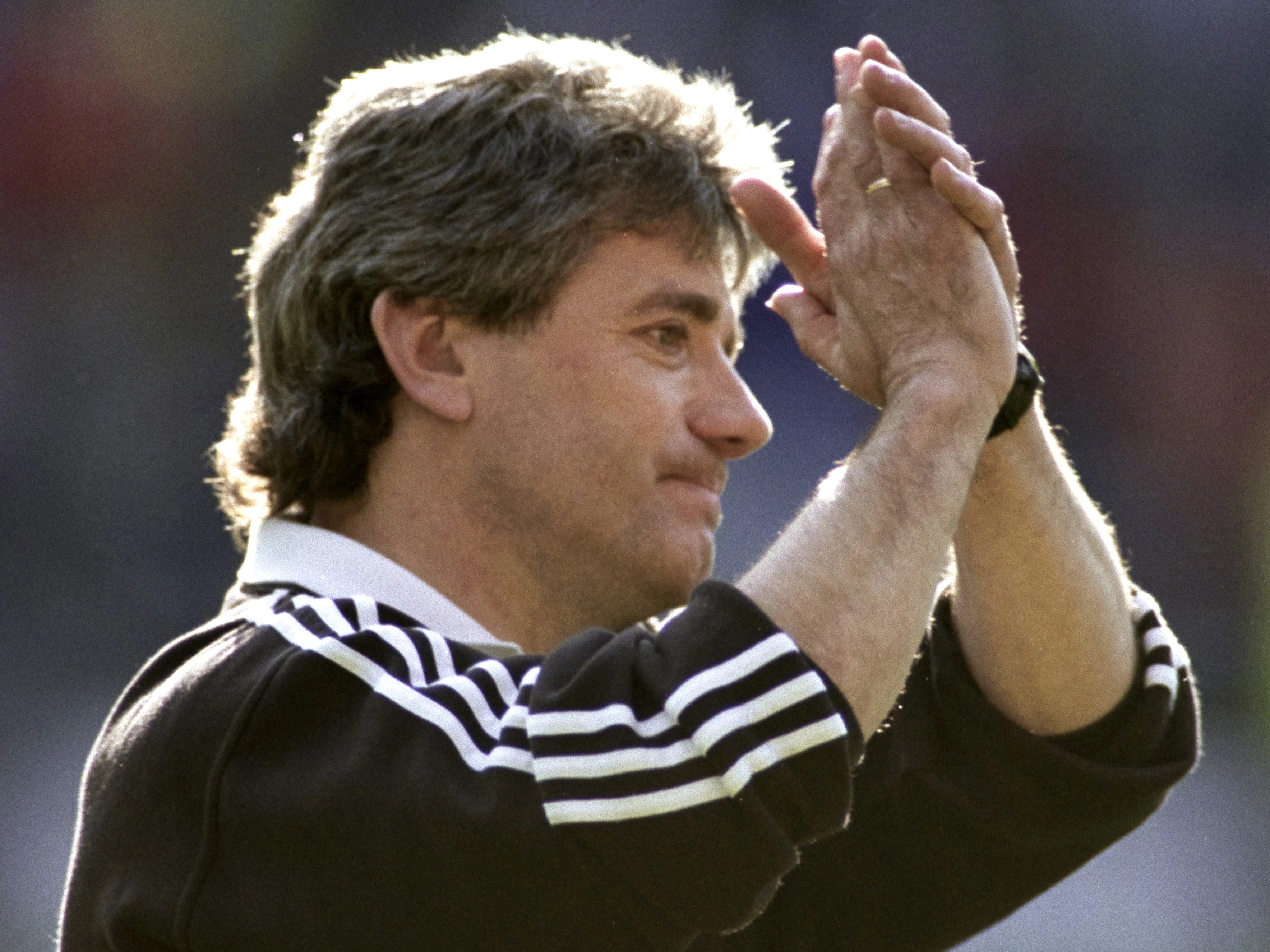
Keegan’s influence did not end when his playing career finished.
Management brought another remarkable chapter.
His association with Newcastle became particularly powerful, first as a player and later as the inspirational manager behind one of the most entertaining teams English football has seen.
He also managed Fulham, Manchester City and England.
There were triumphs, disappointments and unforgettable moments along the way, but Keegan’s emotional connection with supporters remained one of the defining features of his career.
He was never simply admired for what he achieved.
People connected with him.
Perhaps it was his enthusiasm. Perhaps it was his openness. Perhaps it was the sense that beneath the fame remained something of the ambitious young footballer who had once simply needed someone to believe in him.
That story began in Scunthorpe.
A permanent reminder of where dreams can begin
There is something deeply fitting about the idea of a Kevin Keegan statue standing in the town that gave him his first major opportunity.
Because such a memorial would represent more than one man’s achievements.
It would tell a story about possibility.
A young footballer faces rejection.
Someone finally sees his potential.
A door opens.
More than 100 appearances later, he moves to Liverpool for £33,000.
Then come league championships, European trophies, England captaincy, Bundesliga glory and two Ballon d’Or awards.
Eventually, the young man who once needed his first chance becomes “King Kev”.
That is why supporters are determined that his beginning should be remembered alongside his greatest achievements.
The trophies will remain in the history books.
The statistics will continue to be quoted.
The old footage will still show the energy, the goals and that unmistakable presence.
But in Scunthorpe, supporters want something permanent — something future generations can stand beside and ask about.
And when they do, perhaps they will hear the story of a young player who was rejected before one club decided to believe in him.
A player who conquered English and European football but never forgot the place that opened the first door.
Kevin Keegan travelled a very long way from where his football journey began.
But by his own admission, part of him never really left.
And if supporters succeed in creating their lasting tribute, King Kev may soon have a permanent place in the town he always credited with making him.


